Jewish Tours PortugalA Portugal Magik Division
    Private Driver or Self-Drive for Jewish Heritage in Portugal?
    Driver Services — Comparison

    Private Driver or Self-Drive for Jewish Heritage in Portugal?

    Renting a car is a reasonable way to see Portugal, and many visitors do it successfully. For a Jewish heritage journey through the interior, though, the balance shifts. This page sets out the practical differences between driving yourself and travelling with a private English-speaking driver-guide, so travellers can decide with clear information.

    The case for self-drive

    Self-drive offers independence and, on paper, lower cost. Portugal's motorway network is modern and well signposted, Portuguese drivers drive on the right, and international car rental companies operate at Lisbon and Porto airports. Travellers comfortable with European driving, who enjoy navigating and who have flexible plans, can cover the coastal cities and main towns without difficulty.

    For a coastal holiday centred on Lisbon, Cascais and the Algarve, self-drive is often perfectly adequate. The distances are short, the roads are straightforward and the attractions are well known.

    It is worth acknowledging this honestly. A private driver is not necessary for every trip to Portugal. The question is whether it is the better choice for a heritage journey specifically.

    Roads in the heritage interior

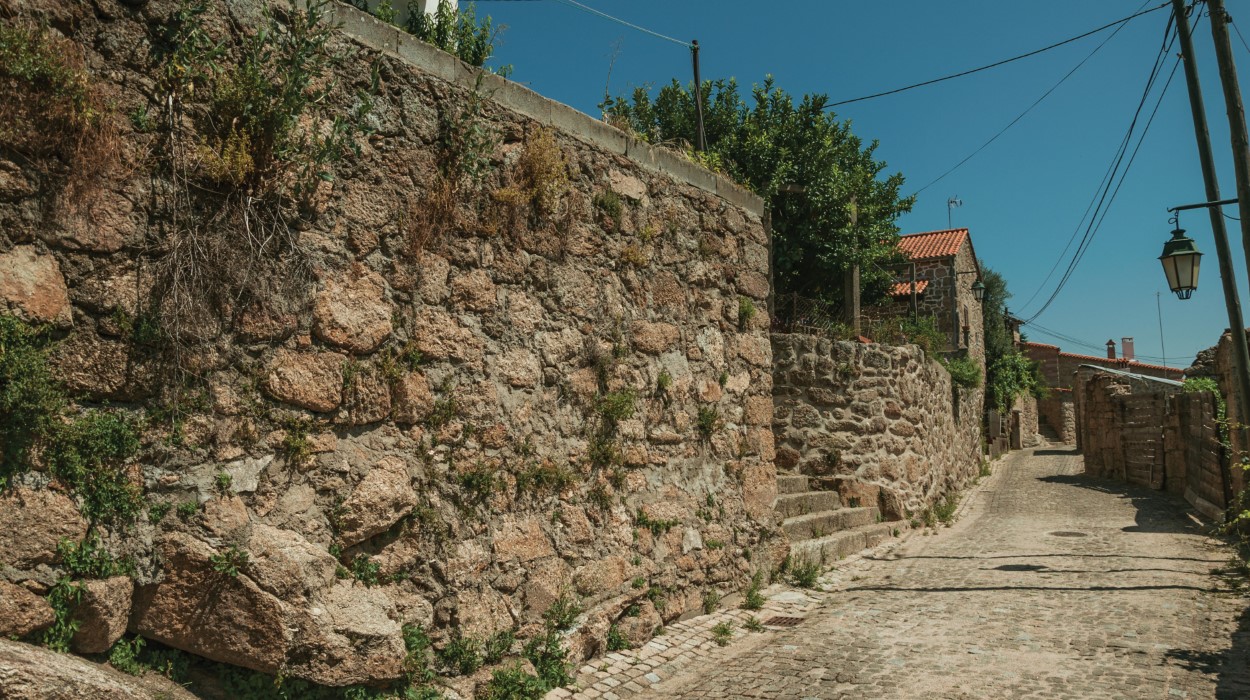
    The heritage towns are a different proposition from the coast. Belmonte, Trancoso, Castelo de Vide and Guarda lie in the interior, reached by motorway for part of the way and then by secondary roads that wind up to hilltop settlements. These roads are generally in good condition but can be narrow, steep and twisting, and they are often unfamiliar to visitors used to North American highways.

    Weather adds another variable. The Serra da Estrela region can see fog, ice and occasionally snow in winter, and summer heat in the Alentejo is intense. Local drivers know when conditions require caution and which alternative routes to take.

    Navigation apps are reliable on main roads but can send drivers into impossibly narrow streets inside historic centres. Avoiding that requires local knowledge.

    Parking and historic centres

    Most heritage towns restrict vehicle access to their historic centres, and some lanes, particularly in Castelo de Vide's Jewish quarter and Belmonte's old town, are simply too narrow and steep for cars. Visitors driving themselves must find parking outside the walls and walk in, sometimes uphill, which is tiring and time-consuming, especially in heat.

    With a private driver, guests are set down at the most convenient point and collected elsewhere, often at the bottom of a slope. The driver then repositions the vehicle while guests explore.

    Over a multi-day journey, the time and energy saved on parking alone are considerable.

    Tolls, fuel and logistics

    Many Portuguese motorways are tolled, and some, including stretches of the A23 towards the Beira interior, use electronic tolling with no booths. Rental cars typically need an electronic device or a registration system to pay these, and the process can confuse visitors. Fuel stations are plentiful on main routes but less so on rural roads.

    With a private driver, all of this disappears. Tolls and fuel are included, and the driver handles them without the guests noticing.

    The same applies to luggage, hotel arrivals and restaurant reservations: the driver coordinates them as part of the day.

    Context and meaning

    The greatest difference is not logistical. A heritage journey is about understanding places whose significance is not always visible: a doorway in Trancoso, a street in Castelo de Vide, a museum in Belmonte. Without context, these can feel like pleasant old towns. With context, they become places where communities survived forced conversion and the Inquisition.

    A driver-guide provides that context continuously, on the road between sites and at the sites themselves. Questions are answered in the moment rather than searched for later.

    Self-drive travellers can prepare by reading in advance, and some do so thoroughly. But it is difficult to drive, navigate and absorb history at the same time.

    Language and local contact

    English is widely spoken in cities and hotels, but less so in small interior towns. Municipal museum staff, café owners and residents may speak only Portuguese. A driver-guide bridges this gap and can open conversations that would otherwise not happen.

    This matters most when something goes wrong: an unexpected closure, a road diversion or a question about access. A fluent local speaker resolves these quickly.

    It also matters at sites with specific rules, such as Belmonte, where synagogue visits are always subject to request and authorization and are not possible on weekends or Shabbat.

    Who gets to enjoy the journey

    On a self-drive trip, one person in the group spends most of the day concentrating on the road. They see less of the landscape, cannot enjoy wine at lunch and often arrive at each site more tired than the others.

    With a private driver, everyone in the group is a traveller. Couples share the experience fully, and families can talk together without the distraction of navigation.

    For many travellers, this is the deciding factor.

    Cost in perspective

    A private driver-guide costs more than a rental car. That difference should be weighed against what it replaces: car hire, insurance excess, fuel, tolls, parking and, above all, the time and energy spent on logistics.

    Our private journeys include the driver-guide, the vehicle, fuel and tolls, alongside hotels and planning. They begin from €2,450 per person for the three-day Sephardic Route.

    For travellers who have waited years to make this journey, the additional cost often represents the difference between a stressful trip and a meaningful one.

    A middle path that does not work well

    Some travellers consider renting a car and hiring local guides at each site. In principle this combines independence with expertise, but in practice it is difficult to arrange in small interior towns, where specialised English-speaking guides are few and must be booked well in advance. Coordinating meeting times while driving long distances adds stress.

    A single driver-guide who stays with the group avoids this fragmentation. Context is continuous, timing is flexible and there is one point of contact throughout.

    Safety and fatigue

    Long days of driving on unfamiliar roads cause fatigue, particularly after a transatlantic flight and in summer heat. Portugal's road safety record has improved considerably, but winding interior roads still demand attention. Visitors driving on the first or second day of a journey, while still adjusting to the time zone, face added risk.

    A professional driver familiar with the roads, rested and accustomed to the distances removes that risk.

    For many families, this alone justifies the choice.

    What travellers tell us

    Travellers who have previously visited Portugal by rental car often tell us that, on a heritage journey, they wanted to focus on the places rather than the road. Many say they had seen the towns before without really understanding them.

    Others say that what they valued most was not the driving at all but the conversations: the explanations on the road, the questions answered, the context that made each site make sense.

    That is the core of what a private driver-guide offers.

    Insurance and rental terms

    Rental contracts in Portugal often carry a significant insurance excess, and damage on narrow streets or in tight car parks is a common source of unexpected costs. Cross-border travel into Spain may also require permission from the rental company and additional fees.

    With a private driver, these concerns disappear: the vehicle, its insurance and any cross-border requirements are the operator's responsibility.

    When self-drive makes sense

    There are situations where self-drive is a good choice: travellers with a week of unstructured time on the coast, those who have visited the heritage towns before and want only to revisit one or two, and confident drivers who enjoy the road. We do not suggest otherwise.

    For a first, structured heritage journey through the interior, particularly for families, senior travellers or anyone who wants to focus on the history, a private driver-guide is usually the more rewarding option.

    Time as the real cost

    The most significant cost of self-drive is often time: time spent collecting and returning the car, finding parking, navigating historic centres, searching for restaurants and recovering from long drives. Over a week, these hours add up to a day or more. With a private driver-guide, that time is returned to the journey, spent instead in museums, Jewish quarters, long lunches and quiet moments of reflection.

    Making the decision

    Self-drive may suit confident drivers with flexible time and a strong interest in independent exploration. A private driver-guide suits travellers who want to focus on the heritage, travel in comfort and leave logistics to someone else.

    Our journeys are all private and all include a dedicated driver-guide. We do not offer self-drive packages.

    Travellers can request availability with their dates and group size to see what a private journey would involve.

    Practical Points

    • —Honest comparison of self-drive and private driver
    • —Narrow interior roads and restricted historic centres
    • —Electronic tolls and logistics handled by the driver
    • —Continuous historical context between sites
    • —Language support in small interior towns
    • —Everyone in the group free to enjoy the journey

    Belmonte synagogue visits are always subject to request and authorization and are not possible on weekends or Shabbat.

    Frequently Asked

    Is driving in Portugal difficult?

    Motorways are straightforward. Interior roads to hill towns can be narrow and winding, and historic centres restrict access.

    Are tolls included with a private driver?

    Yes. Fuel and tolls are included in our journeys.

    Do you offer self-drive packages?

    No. All our journeys include a private driver-guide.

    What is the starting price?

    Our three-day Sephardic Route starts from €2,450 per person.

    Can a rental car be taken into Spain?

    Often yes, but rental companies may require permission and extra fees. With our private driver, cross-border travel is arranged as part of the journey.

    Get Started

    Begin Your Private Jewish Heritage Journey

    Share your plans — we cover the whole country with private tours, transfers and curated experiences.

    Tell us your dates, group size and interests so we can craft the perfect experience.

    Select Your Journey *