Jewish Tours PortugalA Portugal Magik Division
    Vilar Formoso by Private Driver: The Border of Peace
    Driver Services — Border Memorial

    Vilar Formoso by Private Driver: The Border of Peace

    Vilar Formoso is a small town on Portugal's border with Spain, and for thousands of refugees in 1940 it was the first place of safety after months of flight across Europe. Today its memorial museum tells their story. Lying deep in the Beira interior, it is best reached with a private driver-guide as part of a wider heritage journey.

    Why Vilar Formoso matters

    In the spring and summer of 1940, as German forces advanced through France, very large numbers of people fled south towards the Spanish border. Among them were many Jewish families from across Europe. Their hope was to cross Spain and reach Portugal, a neutral country, and from Lisbon to sail to the Americas or elsewhere. Vilar Formoso, where the main railway and road from Spain entered Portugal, was one of the principal points of entry.

    Many of those who crossed here held visas issued in Bordeaux by Aristides de Sousa Mendes, the Portuguese consul-general, who in June 1940 signed visas for refugees in defiance of instructions from his government in Lisbon. He was subsequently disciplined and ended his career in disgrace. Decades later he was recognised by Yad Vashem as Righteous Among the Nations, and his reputation was formally restored in Portugal.

    The town therefore represents a moment when Portugal, a country whose earlier history included the expulsion and forced conversion of its own Jews, became a route to safety for Jews fleeing persecution elsewhere. For many travellers, that contrast gives the visit particular depth.

    The memorial museum

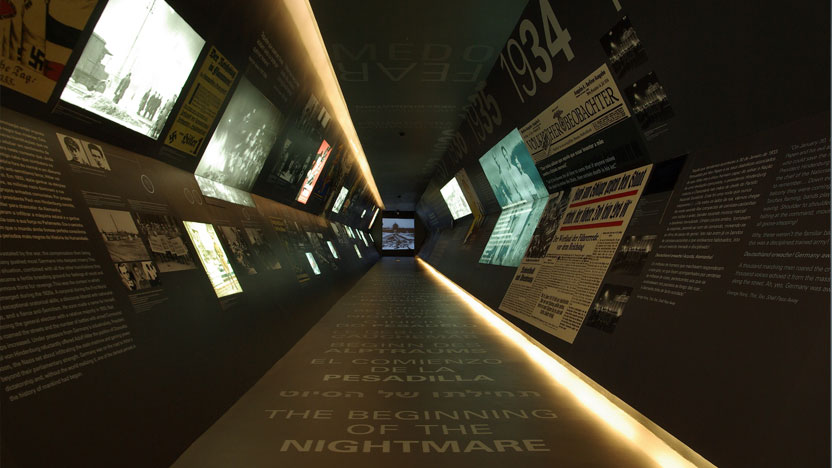
    The memorial Vilar Formoso Fronteira da Paz, meaning the Border of Peace, opened in 2017 in former warehouse buildings beside the railway station. It is dedicated to the refugees who passed through the town and to Aristides de Sousa Mendes, and it presents their journeys through personal stories, photographs, documents and reconstructed settings.

    The museum is designed around the experience of the refugees themselves: the decision to flee, the journey, the border and the uncertain wait in Portugal. Its approach is sober and personal rather than monumental, and many visitors find it deeply affecting.

    Allow at least an hour and a half. The driver-guide can outline the historical background beforehand and then leave guests to move through the exhibition at their own pace, meeting them afterwards for coffee and conversation.

    The railway station

    The station at Vilar Formoso is itself part of the visit. Its walls are decorated with traditional blue-and-white azulejo tile panels depicting Portuguese towns and landscapes, a striking sight in a small border town. It was here that many refugees arriving by train first set foot in Portugal.

    Standing on the platform, with the Spanish border only a short distance away, gives a physical sense of how narrow the margin between danger and safety could be in 1940.

    The driver can set guests down beside the station and museum, which are adjacent, so no walking is required beyond the visit itself.

    Getting there

    Vilar Formoso lies on the A25 motorway near the Spanish frontier, roughly forty minutes east of Guarda and a little over an hour from Belmonte or Trancoso. From Lisbon it is around three and a half to four hours, so it is almost always visited as part of a journey through the Beira interior rather than as a separate trip.

    The most natural sequence places Vilar Formoso after Guarda and before crossing into Spain, or as a half-day excursion from a base in the Beira interior. Salamanca is a little over an hour beyond the border.

    Public transport to the town exists but is infrequent and poorly suited to combining the museum with other sites on the same day.

    Connecting the chapters

    A journey that includes Vilar Formoso links several centuries of history. In Tomar, Castelo de Vide, Trancoso and Belmonte, travellers encounter the medieval communities and the consequences of 1496 and 1497. At Vilar Formoso, they encounter the twentieth century and the refugees who passed through Portugal on their way to new lives.

    Lisbon completes the circle. The refugees who crossed at Vilar Formoso travelled on to the capital, where many waited for months for passage. A driver-guide can connect these places into a single narrative, explaining how the same country appears in such different roles across time.

    The driver-guide presents this history with care and avoids simplification: Portugal under the Estado Novo was not a straightforward haven, and the museum itself conveys the complexity of the period.

    Almeida and the nearby frontier

    A few kilometres north of Vilar Formoso, the fortified town of Almeida is one of the finest examples of star-shaped military architecture in Portugal, with its bastions and moats largely intact. It played a role in the Peninsular War and makes a striking companion visit.

    Further afield, the historic villages of the region, including Castelo Rodrigo and Pinhel, offer quiet streets and wide views across the borderland.

    These additions are optional and depend on the time available and the interests of the group.

    A reflective visit

    Vilar Formoso is not a place for hurry. Many travellers find that the memorial prompts reflection on their own family histories, on the people who helped and those who did not, and on the meaning of borders.

    We plan the day so that there is time afterwards: a quiet coffee, a walk, or simply a calm drive onwards without a tight schedule. The driver-guide is attentive to the mood of the group and offers conversation or silence as appropriate.

    We do not undertake research into individual refugee records or family histories. Our role is to bring travellers to the place and to provide historical context.

    Practical notes

    Museum opening hours vary and the memorial may close on certain days of the week. The driver confirms the schedule in advance. Signage and texts are available in English as well as Portuguese.

    The museum is on a single level for the most part, and the station platform is flat, which makes the visit comfortable for most travellers, including those with limited mobility.

    There are cafés in the town and restaurants in Guarda and the surrounding area for lunch.

    Refugees waiting in Portugal

    After crossing at Vilar Formoso, many refugees were directed to towns where they were required to reside while waiting for onward passage. Some spent weeks or months in places such as Figueira da Foz, Caldas da Rainha, Ericeira and the coastal towns near Lisbon. Their presence left traces in local memory and, in some cases, in local archives.

    A journey that follows this history can include some of these towns, linking the border with the coast. A driver-guide can describe what is documented about each.

    This chapter is less widely known than the visas of Sousa Mendes, but it is an important part of the story.

    Remembering Sousa Mendes

    Aristides de Sousa Mendes was born in 1885 in Cabanas de Viriato, a village in central Portugal. His family home there, the Casa do Passal, has been the subject of restoration efforts. In 2020, the Portuguese parliament voted to honour him with a cenotaph in the National Pantheon in Lisbon.

    Travellers with a particular interest in his story can include Cabanas de Viriato in a tailor-made itinerary.

    His memory connects Vilar Formoso, Bordeaux and Lisbon into a single story of conscience.

    Travellers with personal connections

    Some visitors to Vilar Formoso have family members who crossed into Portugal in 1940. For them, the visit can be intensely personal. The driver-guide gives such guests time and space, and the team can plan the day so that nothing follows too closely.

    We do not offer research into individual records, but we can bring guests to the place and provide the historical context of the crossings.

    Reading and reflection

    Before visiting, some travellers like to read about the refugee routes of 1940 and the life of Aristides de Sousa Mendes. The team can suggest accessible books and documentary sources. Afterwards, the driver-guide is happy to continue the conversation on the road towards Guarda, Belmonte or Spain.

    Visiting with care

    The memorial is a place of remembrance, and visitors are asked to move through it quietly. The driver-guide respects this, offering background before entering and leaving guests to absorb the exhibition in their own way.

    Vilar Formoso in our journeys

    Vilar Formoso is included in our longer journeys through the Beira interior and is a natural stop on the fourteen-day Iberian Sephardic Legacy as the route crosses into Spain. It can also be built into any tailor-made itinerary that spends time in the region.

    Travellers with a particular interest in the Second World War and the refugee routes through Iberia can request an itinerary that follows those routes more closely, linking Vilar Formoso with Lisbon and the coastal towns where refugees waited.

    In every case, a private driver-guide makes this remote but important place accessible and meaningful.

    Practical Points

    • —Vilar Formoso Fronteira da Paz memorial museum
    • —The story of Aristides de Sousa Mendes
    • —Tiled railway station where refugees arrived
    • —Around forty minutes from Guarda
    • —Natural stop before crossing into Spain
    • —Fortified town of Almeida nearby

    Frequently Asked

    When did the museum open?

    The Vilar Formoso Fronteira da Paz memorial opened in 2017.

    Who was Aristides de Sousa Mendes?

    The Portuguese consul-general in Bordeaux who in June 1940 issued visas to refugees against his government's orders. He was later recognised as Righteous Among the Nations.

    Can you research a relative who crossed here?

    No. We do not undertake archival or family research.

    How long should we allow?

    At least an hour and a half for the museum and station.

    Is the museum suitable for limited mobility?

    The memorial is mostly on one level and the station platform is flat, so the visit is comfortable for most travellers.

    Get Started

    Begin Your Private Jewish Heritage Journey

    Share your plans — we cover the whole country with private tours, transfers and curated experiences.

    Tell us your dates, group size and interests so we can craft the perfect experience.

    Select Your Journey *