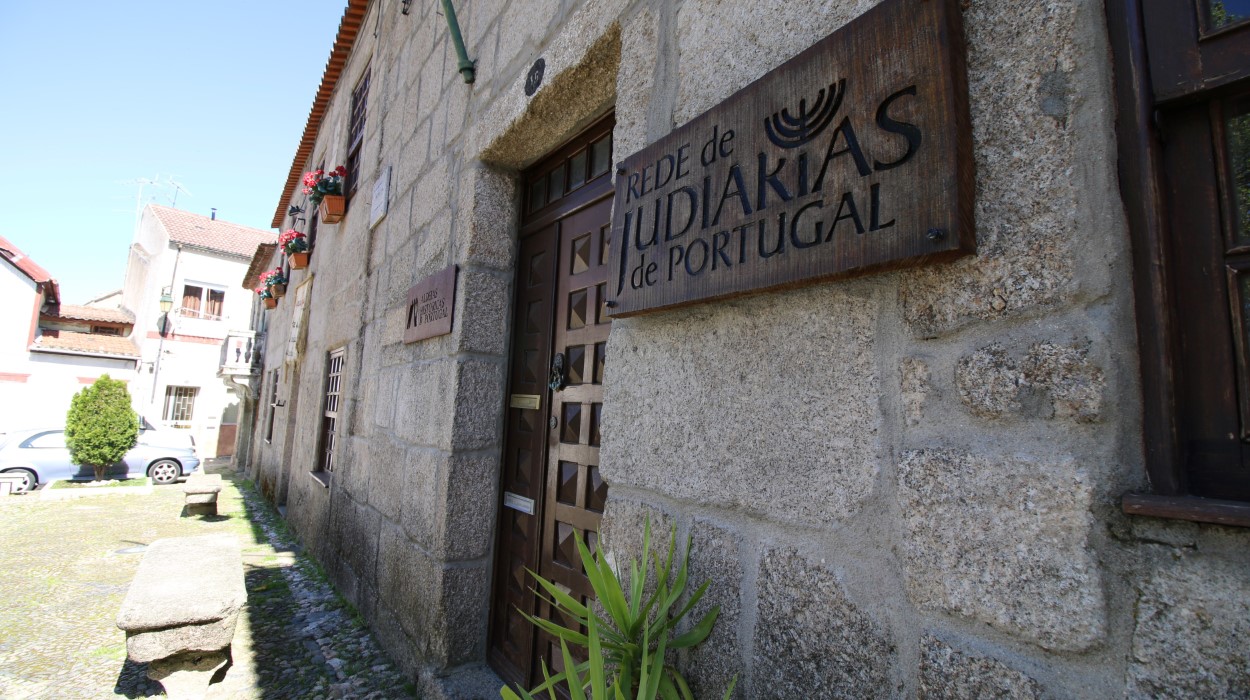
Historical Background
Trancoso held a significant Jewish population through the medieval period, drawn in part by its position on trade and pilgrimage routes near the Castilian border and its status as a fortified royal town. The community is associated with the sixteenth-century mystic and self-proclaimed prophet Bandarra, a shoemaker of converso background whose prophetic verses were later invoked by Sebastianist movements; his house is marked in the old town and remains a point of local memory distinct from, but connected to, the town's Jewish past.
As elsewhere in Portugal, the 1497 forced conversions ended overt Jewish life in Trancoso, and many of the crosses visible today on door lintels are understood locally as later markings, added by converso families or subsequent owners, over the recesses that had held mezuzot — a visible layer of the transition from open to hidden identity.