Jewish Tours PortugalA Portugal Magik Division
    Serra da Estrela and Beira Interior by Private Driver
    Driver Services — Mountains

    Serra da Estrela and Beira Interior by Private Driver

    The Serra da Estrela, Portugal's highest mainland mountain range, rises above the Beira interior, where the most significant Jewish heritage towns of the country lie: Belmonte, Guarda, Covilhã and, a little further north, Trancoso. This is a region of granite, distances and winding roads, best explored with a private driver-guide.

    A mountain region and its communities

    The Beira interior had several Jewish communities in the late Middle Ages, and after the forced conversions of 1497 it became one of the regions where New Christian families lived in largest numbers. Distance from the coastal centres of power and proximity to the Spanish border may have helped some of them maintain elements of Jewish identity in private for centuries.

    Belmonte's community is the best-known example, with descendants of crypto-Jews whose existence was made widely known in the early twentieth century and who later returned formally to Judaism. Other towns in the region, including Guarda, Covilhã and Trancoso, also have documented Jewish histories.

    A journey through the region links these towns into a coherent story.

    Belmonte

    Belmonte, on the eastern edge of the Serra, is home to the Jewish Museum of Belmonte, the historic town centre and a castle overlooking the valley. The museum presents the history of the community and of Jewish life in the region.

    Visits to the synagogue are always subject to request and authorization and are not possible on weekends or Shabbat. We plan Belmonte on weekdays and are clear that access is not guaranteed.

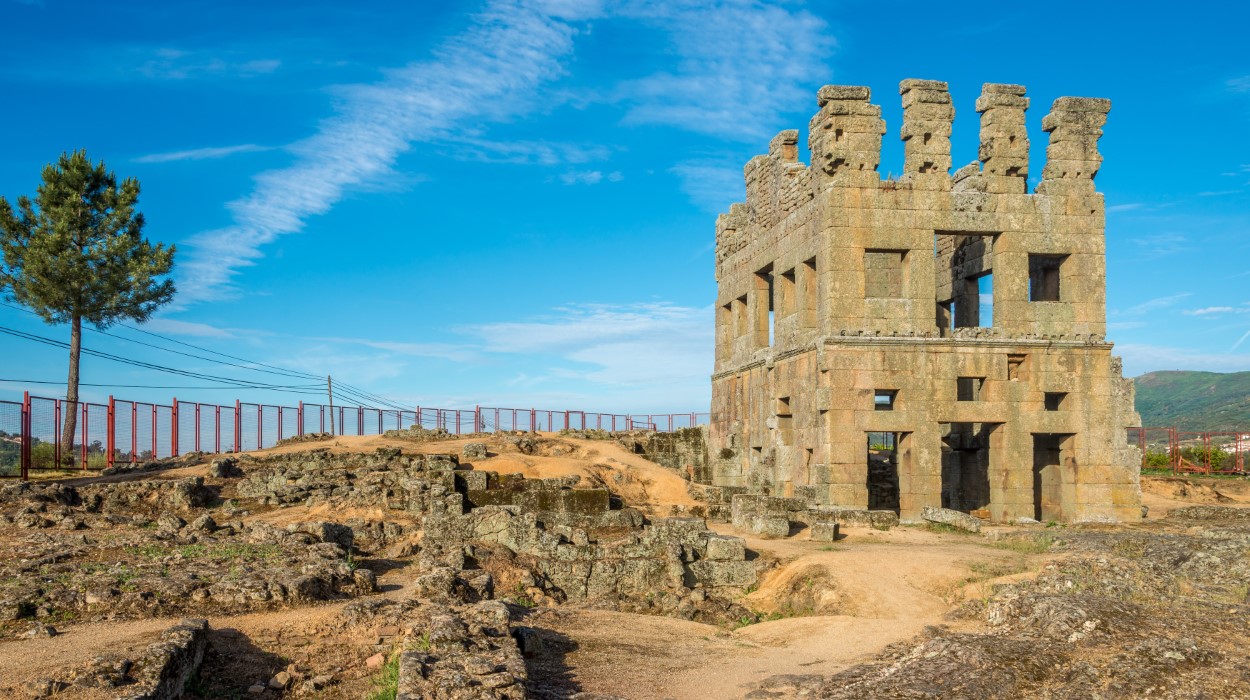
    The nearby Roman ruin of Centum Cellas, a striking granite tower, can be added for travellers interested in the region's deeper past.

    Guarda

    Guarda, at around a thousand metres, is the highest city in Portugal. Its fortress-like cathedral dominates the historic centre, and the area of the former Jewish quarter lies nearby, with streets that retain medieval character.

    The city is a natural hub for the region, around half an hour from Belmonte and a little more from Trancoso. Its hotels make a good base for a multi-night stay.

    Guarda can be cold, and in winter it occasionally sees snow. The driver monitors conditions and adapts plans.

    Covilhã

    Covilhã, on the slopes of the Serra, has a long history as a centre of wool and textile production. New Christians are frequently mentioned in historical accounts of the town's industry, and the Wool Museum, part of the University of Beira Interior, tells the story of the trade.

    The town is built on steep slopes, and the driver plans visits to reduce walking. Views over the Cova da Beira valley are extensive.

    Covilhã is also the gateway to the upper Serra da Estrela, and the road to the summit area at Torre passes through dramatic mountain scenery.

    Trancoso

    Trancoso, on the plateau north of Guarda, is a walled town with the Isaac Cardoso Jewish Interpretation Centre, named after the seventeenth-century physician born there to a New Christian family. The town's streets preserve carved doorways and the so-called Casa do Gato Preto.

    Trancoso is around an hour and a quarter from Belmonte, making it easy to combine the two on one day or across two days.

    Nearby, the fortified villages of Marialva, Pinhel and Almeida add further historical depth.

    Driving in the mountains

    The A23 and A25 motorways serve the region well, but the final approaches to towns and the roads into the Serra itself are winding and steep. In winter, ice and snow can close high roads. An experienced driver knows when to take alternative routes.

    Distances in the region are moderate, typically half an hour to an hour and a quarter between towns, which allows two sites in a day without long drives.

    Fog can descend quickly on the higher roads, and the driver plans with this in mind.

    Food and landscape

    The Serra da Estrela is known for its cheese, made from sheep's milk, and for mountain cooking: roast lamb and kid, bean stews, sausages and chestnuts. Local restaurants serve these dishes well, and the driver can recommend tables.

    The landscape varies from granite plateaus to glacial valleys and forests. In spring and autumn, walks in the Natural Park are rewarding; in winter, the high Serra offers snow.

    The Beira interior also produces wine, and estates in the region can be included.

    Where to stay

    Accommodation options include a pousada in a former convent near Belmonte, hotels in Guarda and Covilhã, and mountain hotels within the Serra.

    We recommend two or three nights in the region, which allows Belmonte, Guarda, Trancoso and optionally Vilar Formoso to be visited without rushing.

    The driver coordinates hotel arrivals and luggage.

    Castelo Branco, Penamacor and the south

    South of the Serra, the Beira Baixa offers further places with Jewish history. Castelo Branco, a regional capital, had a community, and the town is associated with Amato Lusitano, the sixteenth-century physician of New Christian origin who later practised in Italy and elsewhere. Penamacor, near the Spanish border, and the dramatic village of Monsanto lie further east.

    These places can be added on the way between Lisbon and Belmonte, or as a day from a base in the region.

    The driver-guide presents each in its context, linking it to the wider story of the Beira.

    The Natural Park

    The Serra da Estrela Natural Park covers a large area of mountains, valleys and plateaus. Its glacial landscapes, lakes and granite formations offer a striking contrast with the heritage towns.

    For travellers who enjoy nature, a scenic drive across the Serra, with stops at viewpoints, can be included. In winter, the upper Serra offers snow.

    The driver plans routes according to the season and road conditions.

    Why the mountains preserved memory

    Historians have suggested several reasons why crypto-Jewish practice survived particularly in the Beira interior: distance from the main centres of power, close-knit communities, economic roles in trade and textiles, and proximity to the border. None of these alone explains the survival, and the question remains a subject of study.

    Travelling through the region with a driver-guide helps make these factors tangible. The distances, the isolation of the towns and the closeness of Spain become visible on the road.

    This understanding gives Belmonte, Guarda and Trancoso their full meaning.

    Linhares, Gouveia and Seia

    On the western side of the Serra, the historic village of Linhares da Beira and the towns of Gouveia and Seia lie on routes between the coast and the interior. Some had documented Jewish residents in the medieval period. They can be included when a journey approaches the Serra from the west.

    These places are quiet and atmospheric, with mountain views and traditional architecture.

    A sample two-day route

    A representative two-day route through the region might begin in Belmonte with the Jewish Museum and castle, continue to Guarda for an afternoon in the historic centre and an overnight stay, and then head north to Trancoso the following morning before a visit to Vilar Formoso in the afternoon.

    Another variation includes Covilhã and a drive across the Serra. The driver adapts the plan to the season and the group's interests.

    Seasons in the Beira interior

    Spring brings blossom and green hillsides, and temperatures are comfortable for walking. Summer is warm to hot in the valleys, though cooler at altitude. Autumn brings chestnuts and changing colours. Winter is cold, with snow on the upper Serra and occasionally in Guarda.

    Each season has its appeal, and the driver plans routes accordingly. For first-time visitors focused on heritage, spring and autumn usually offer the best balance.

    Why travellers return

    Many travellers who visit the Beira interior on a first journey return later for a longer stay. The region's combination of profound history, quiet towns and mountain landscape is unlike anywhere else in Portugal, and it rewards slow exploration with a knowledgeable driver-guide.

    Belmonte at the centre

    Most travellers come to the region for Belmonte, and the route is often built around it. The driver plans the Belmonte visit for a weekday, with time for the museum, the old town and the castle, and arranges the other towns around it so that the day of the visit is never rushed. Where a synagogue visit has been requested and authorised, the timing of the whole day is set to suit it.

    In our journeys

    The Beira interior is central to all our journeys. The three-day Sephardic Route includes Belmonte and Trancoso; longer journeys add Guarda, Covilhã and Vilar Formoso.

    Tailor-made itineraries can centre on the region for travellers with particular interest in crypto-Jewish history.

    In every case, a private driver-guide makes the mountain distances comfortable.

    Practical Points

    • —Belmonte's Jewish Museum and historic centre
    • —Guarda, the highest city in Portugal
    • —Covilhã and the history of the wool trade
    • —Trancoso and the Isaac Cardoso centre
    • —Mountain food, cheese and landscape
    • —Experienced driving on winding mountain roads

    Belmonte synagogue visits are always subject to request and authorization and are not possible on weekends or Shabbat.

    Frequently Asked

    How far apart are the towns?

    Typically half an hour to an hour and a quarter between Belmonte, Guarda, Covilhã and Trancoso.

    Is the region accessible in winter?

    Yes, though high roads can close for snow. The driver adapts plans.

    How many nights should we stay?

    Two or three nights allows an unhurried visit.

    Can we visit the Belmonte synagogue?

    Visits are always subject to request and authorization and are not possible on weekends or Shabbat.

    Who was Amato Lusitano?

    A sixteenth-century physician of New Christian origin associated with Castelo Branco, who later practised medicine in Italy and elsewhere.

    Is Guarda a good base?

    Yes. It lies within easy reach of Belmonte, Trancoso and Vilar Formoso.

    Get Started

    Begin Your Private Jewish Heritage Journey

    Share your plans — we cover the whole country with private tours, transfers and curated experiences.

    Tell us your dates, group size and interests so we can craft the perfect experience.

    Select Your Journey *