Jewish Tours PortugalA Portugal Magik Division
    Portalegre: Tapestries, Tanneries and a Documented Jewish Quarter
    Heritage Places — Alto Alentejo

    Portalegre: Tapestries, Tanneries and a Documented Jewish Quarter

    Portalegre, the principal town of the Alto Alentejo, held a documented medieval Jewish quarter whose merchants and artisans contributed to a local economy that would later become known for silk weaving and, from the twentieth century, tapestry manufacture of international reputation.

    Historical Background

    Portalegre's Jewish community is recorded from at least the fourteenth century, engaged in trade, moneylending and craft production typical of Alentejo market towns of the period, and connected commercially to the nearby communities of Castelo de Vide and Marvão. Following the 1497 forced conversions, converso families in Portalegre, as in the wider Alto Alentejo, remained subject to Inquisition scrutiny, and some family lines associated with the town's later silk industry are traced by regional historians to this earlier converso merchant class.

    What Remains Today

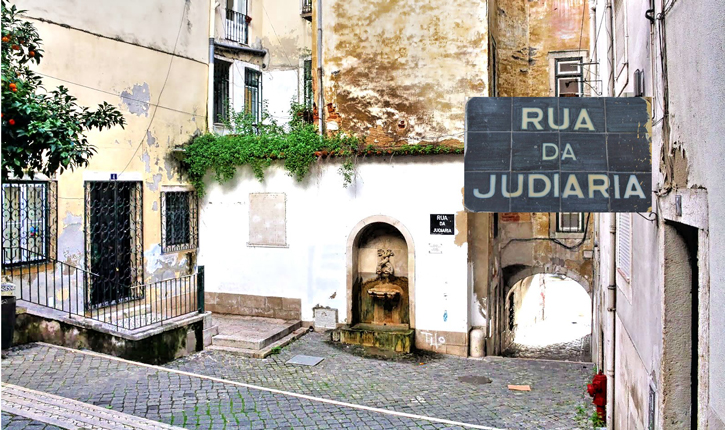
    Portalegre's historic Judiaria occupied streets near the old town's upper section close to the castle, though later urban development has altered much of the original fabric compared to the more intact quarters of Castelo de Vide. The town's Museu da Tapeçaria and its well-preserved eighteenth-century mansions offer broader context on Portalegre's commercial history, of which the medieval Jewish community formed an early chapter.

    From Judiaria to Tapestry Town

    Portalegre's later reputation for silk and tapestry work, culminating in the internationally regarded Manufactura de Tapeçarias de Portalegre founded in the twentieth century, gives the town's commercial history a continuity that heritage travellers often find illuminates how trades associated with early Jewish and converso communities persisted and evolved locally over centuries.

    How We Visit

    A private guide walks the former Judiaria streets and the historic centre, with a visit to the Museu da Tapeçaria where time allows, generally as part of a day that also includes Castelo de Vide and Marvão.

    What You Will See

    • The former Judiaria streets near Portalegre's castle
    • The Museu da Tapeçaria and its history of the town's textile trade
    • Eighteenth-century mansions in the historic centre
    • Context on converso family continuity into the silk trade
    • Pairing with Castelo de Vide and Marvão

    Frequently Asked

    How far is Portalegre from Lisbon?

    About two hours by private car, usually combined with Castelo de Vide and Marvão on the same route.

    Which journeys include Portalegre?

    It appears as an optional stop on our 6, 10 and 14-day journeys.

    Testimonials

    Voices of Our Travelers

    1,200+ verified 5-star reviews across the Portugal Magik brand

    "Our family traced five generations of history across Portugal in ten extraordinary days. The depth of knowledge and sensitivity of our guide transformed what could have been tourism into something genuinely profound."

    The Abramowitz Family

    New York, USA

    "As a scholar of Sephardic history, I was impressed by the academic rigor woven into every aspect of the journey. This is not a tour — it is a carefully curated educational experience of the highest caliber."

    Dr. Sarah Levi

    London, UK

    "Three generations of our family traveled together for our son's Bar Mitzvah heritage journey. Standing in the historic Jewish quarters where our ancestors once lived was a moment none of us will ever forget."

    The Cohen Family

    Los Angeles, USA

    Get Started

    Begin Your Private Jewish Heritage Journey

    Share your plans — we cover the whole country with private tours, transfers and curated experiences.

    Tell us your dates, group size and interests so we can craft the perfect experience.

    Select Your Journey *