Jewish Tours PortugalA Portugal Magik Division
    Private Driver Across the Portugal–Spain Border
    Driver Services — Iberia

    Private Driver Across the Portugal–Spain Border

    The history of Iberia's Jews does not stop at the border. Many families who left Castile after 1492 crossed into Portugal, and the frontier towns of both countries share a common story. A private driver who can cross the border with guests allows that story to be followed continuously, from Portuguese hill towns to the great Sephardic cities of Spain.

    A shared frontier history

    When the Catholic Monarchs issued the Alhambra Decree in 1492, ordering the expulsion of Jews from their kingdoms, a large number of those who left made their way into Portugal, many crossing the land frontier in the regions around Castelo de Vide, Marvão, Guarda and the Beira interior. For a few years Portugal offered refuge, at a price. The decree of King Manuel I in 1496 and the forced conversions of 1497 closed that door.

    In the following centuries, movement across the frontier continued in both directions as New Christian families sought to escape the attention of one Inquisition or the other. The border region, remote and mountainous, became a place where identities could be quietly maintained, which helps explain why crypto-Jewish communities such as Belmonte's survived so close to it.

    A journey that crosses the border lets travellers experience this geography directly. The landscape changes little at the frontier; the history on either side is deeply entwined.

    Vilar Formoso and the twentieth century

    The border town of Vilar Formoso holds a different chapter. During the Second World War, thousands of refugees, many of them Jewish, entered Portugal here by rail and road after crossing Spain, a large number with visas issued in Bordeaux by the Portuguese consul Aristides de Sousa Mendes in June 1940 against his government's orders.

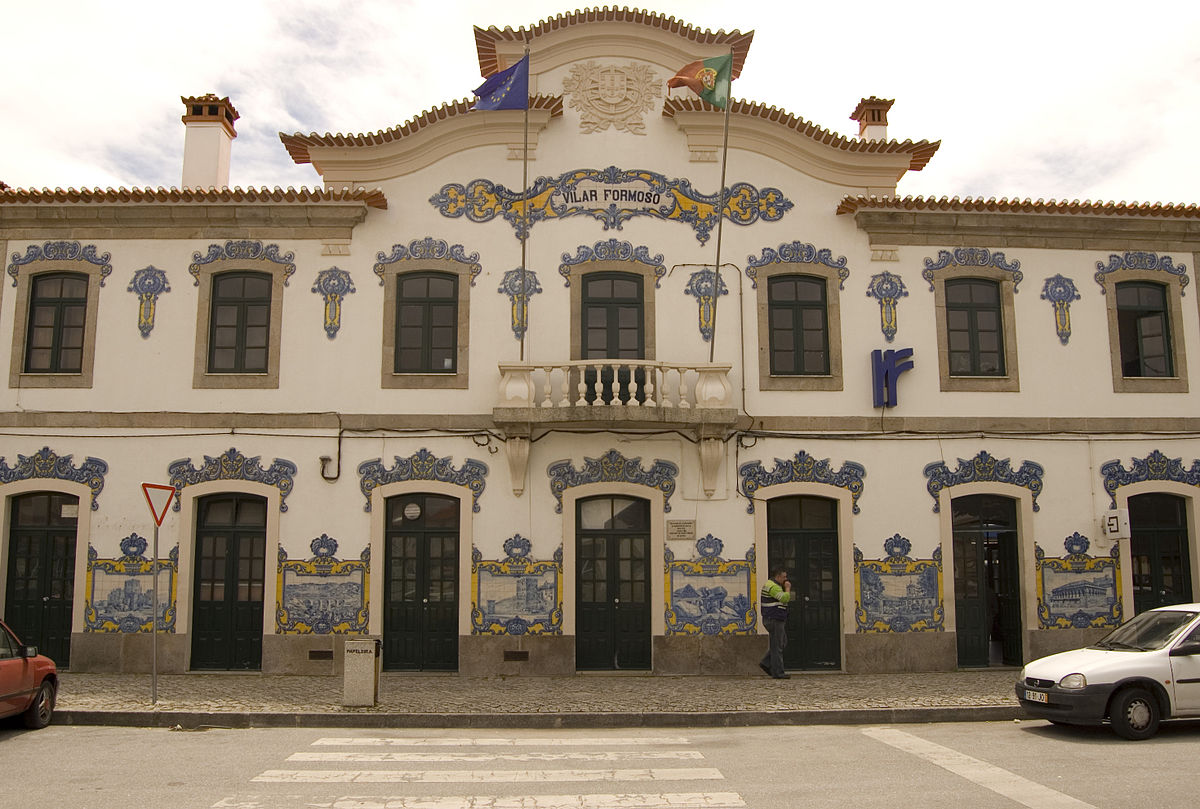
    The memorial museum Vilar Formoso Fronteira da Paz, opened in 2017 in buildings beside the railway station, tells the story of those refugees and of Sousa Mendes. Its displays are thoughtful and moving, and the station itself, decorated with traditional tiles, is part of the experience.

    For travellers crossing into Spain by road, Vilar Formoso is the natural final stop in Portugal. A driver-guide can introduce the museum's themes on the approach and allow time afterwards for reflection before continuing.

    Into Spain: Salamanca and beyond

    From Vilar Formoso, Salamanca is a little over an hour across the border. Its university, among the oldest in Europe, and its golden sandstone architecture make it a natural first Spanish stop. Medieval Salamanca had a Jewish community, and the city's intellectual history intersects with that of Sephardic scholars, including Abraham Zacuto, who taught in the region before leaving for Portugal.

    Further east and south, the route can continue to Ávila and Segovia, both with documented medieval Jewish quarters, and on to Toledo, whose two surviving medieval synagogue buildings, Santa María la Blanca and El Tránsito, the latter housing the Sephardic Museum, are among the most important Jewish monuments in Europe.

    On longer journeys, the route can extend to Córdoba, Seville or Girona, each with its own preserved Jewish quarter and museum. The driver plans the stages so that daily drives remain comfortable.

    One driver, two countries

    The advantage of a single driver across the border is continuity. Guests do not change vehicles at the frontier or meet a new team in Spain; luggage stays in place, and the conversation that began in Lisbon continues in Salamanca and Toledo.

    Our driver-guides are experienced on Spanish roads and familiar with the main Sephardic sites on the route. Where a specialist local guide adds value at a particular Spanish monument, that can be arranged as part of planning.

    Where a very long journey requires a handover, for example on an itinerary that ends in Catalonia, we plan it in advance and explain it to guests before departure.

    Practicalities of crossing

    Portugal and Spain are both in the Schengen area, and there are no routine border checks for travellers crossing by road. Guests should nevertheless carry their passports at all times, as identification may be requested at hotels or in the event of spot checks.

    Spain is one hour ahead of Portugal throughout the year. This matters for museum opening times and dinner reservations, and the driver adjusts the schedule accordingly. Spanish lunch and dinner times are also later than Portuguese ones.

    Tolls apply on some motorways in both countries, and these are included in our journeys. Final departure from Spain is usually from Madrid, with the driver handling the airport transfer.

    Pace across Iberia

    The distances in Spain are greater than in Portugal. Salamanca to Toledo, for example, is around three hours by road. For this reason the Spanish part of a journey is usually built around fewer, longer stays, with two nights in key cities rather than a new hotel each night.

    This pace allows time for both the Jewish heritage and the wider cultural life of each city: cathedrals, museums, markets and restaurants. The driver remains available for excursions from each base.

    Our fourteen-day Iberian Sephardic Legacy follows this approach, linking the Portuguese heritage towns with Spain's principal Sephardic cities in a single, coherent narrative.

    Frontier towns on the Portuguese side

    Before the crossing, several Portuguese frontier towns are worth a visit. Almeida, a star-shaped fortress town, sits a few kilometres from Vilar Formoso. Castelo Rodrigo, a historic hilltop village, overlooks the borderland further north. Further south, Penamacor, Sabugal and Monsanto lie in the Beira Baixa near the frontier, and Castelo de Vide and Marvão in the northern Alentejo.

    Some of these towns had medieval Jewish communities, and their position near Castile shaped their history in the years around 1492. A driver-guide can introduce them according to the time available and the route chosen.

    These towns are quiet and rarely crowded, which adds to their appeal.

    Toledo in more detail

    Toledo was one of the principal centres of Jewish life in medieval Castile, and its two surviving medieval synagogue buildings are among the most important in Europe. Santa María la Blanca, with its horseshoe arches and white columns, dates in its present form from the late twelfth or thirteenth century. The Synagogue of El Tránsito, built in the fourteenth century under the patronage of Samuel ha-Levi, houses the Sephardic Museum.

    Both buildings were converted to churches after 1492 and later restored. The Sephardic Museum presents the history of Jews in Spain and of the Sephardic diaspora.

    Toledo is a natural highlight of the Spanish chapter, typically with two nights to allow time for its many monuments.

    Planning around Shabbat and Spanish hours

    In Spain, as in Portugal, some heritage sites have their own schedules and may close on certain days. The driver plans the Spanish chapter with these in mind, together with the later Spanish meal times.

    Our journeys do not include Shabbat coordination or kosher arrangements, and travellers with specific requirements should discuss them at the enquiry stage so that expectations are clear.

    Within these parameters, the Spanish chapter is planned with the same care as the Portuguese one.

    Salamanca and Zacuto

    Abraham Zacuto, the astronomer whose name is given to the museum in the Tomar synagogue, was born in Salamanca and worked in the region before leaving for Portugal after 1492. Visiting Salamanca after Tomar therefore closes a circle, and the driver-guide can draw the connection between the two places.

    Salamanca's old university, cathedrals and Plaza Mayor make it one of the most beautiful cities in Spain, well worth a night.

    Hervás and the Spanish frontier

    On the Spanish side of the border, the town of Hervás in Extremadura preserves a well-known Jewish quarter of steep lanes and timbered houses. It can be included on a route between the Portuguese Beira and central Spain.

    Other Spanish frontier towns with Jewish history include Ciudad Rodrigo and Cáceres, each with its own character.

    Ending in Madrid

    Most cross-border journeys end in Madrid, which offers the widest choice of international flights. The final day typically involves a drive from Toledo or Segovia, each around an hour from the capital, with time for a farewell lunch before the airport transfer or a final night in a Madrid hotel.

    A single narrative

    Crossing the border with one driver-guide turns two national histories into one Iberian story: the Spanish expulsion of 1492, the Portuguese conversions of 1497, the parallel Inquisitions, the diaspora that followed and the twentieth-century refugees who travelled in the opposite direction. Seeing this story unfold across both countries, without interruption, is one of the most rewarding ways to understand Sephardic history.

    Designing a cross-border journey

    The fourteen-day Iberian journey is our standard cross-border itinerary. Tailor-made journeys can also be designed around a particular interest, such as the frontier towns on both sides, the intellectual history of Salamanca and Toledo, or the refugee routes of 1940.

    When enquiring, travellers can indicate whether they wish to begin in Lisbon, Porto or Madrid and how much time they have. The team proposes a route that balances distance and depth.

    In every case, a single private driver-guide makes the crossing seamless.

    Practical Points

    • —Continuous journey from Portugal into Spain with one driver
    • —Vilar Formoso Fronteira da Paz memorial museum
    • —Salamanca, Ávila, Segovia and Toledo
    • —Context on 1492, 1496–97 and the frontier communities
    • —Schengen crossing with no routine checks
    • —Included in the fourteen-day Iberian journey

    Frequently Asked

    Do we need to change cars at the border?

    No. The same driver and vehicle continue into Spain.

    Is there a time difference?

    Yes. Spain is one hour ahead of Portugal all year.

    Which Spanish cities can be included?

    Commonly Salamanca, Ávila, Segovia and Toledo, with Córdoba, Seville or Girona on longer itineraries.

    Where does a cross-border journey end?

    Usually in Madrid, though other endings can be planned.

    Get Started

    Begin Your Private Jewish Heritage Journey

    Share your plans — we cover the whole country with private tours, transfers and curated experiences.

    Tell us your dates, group size and interests so we can craft the perfect experience.

    Select Your Journey *