Jewish Tours PortugalA Portugal Magik Division
    Castelo de Vide by Private Driver
    Driver Services — Alentejo

    Castelo de Vide by Private Driver

    Castelo de Vide, a whitewashed hill town in the northern Alentejo close to the Spanish border, preserves one of the most legible medieval Jewish quarters in Portugal. It sits roughly two and a half hours from Lisbon, on roads that public transport serves poorly, which is precisely why a private driver-guide makes such a difference to the visit.

    A Jewish quarter that kept its shape

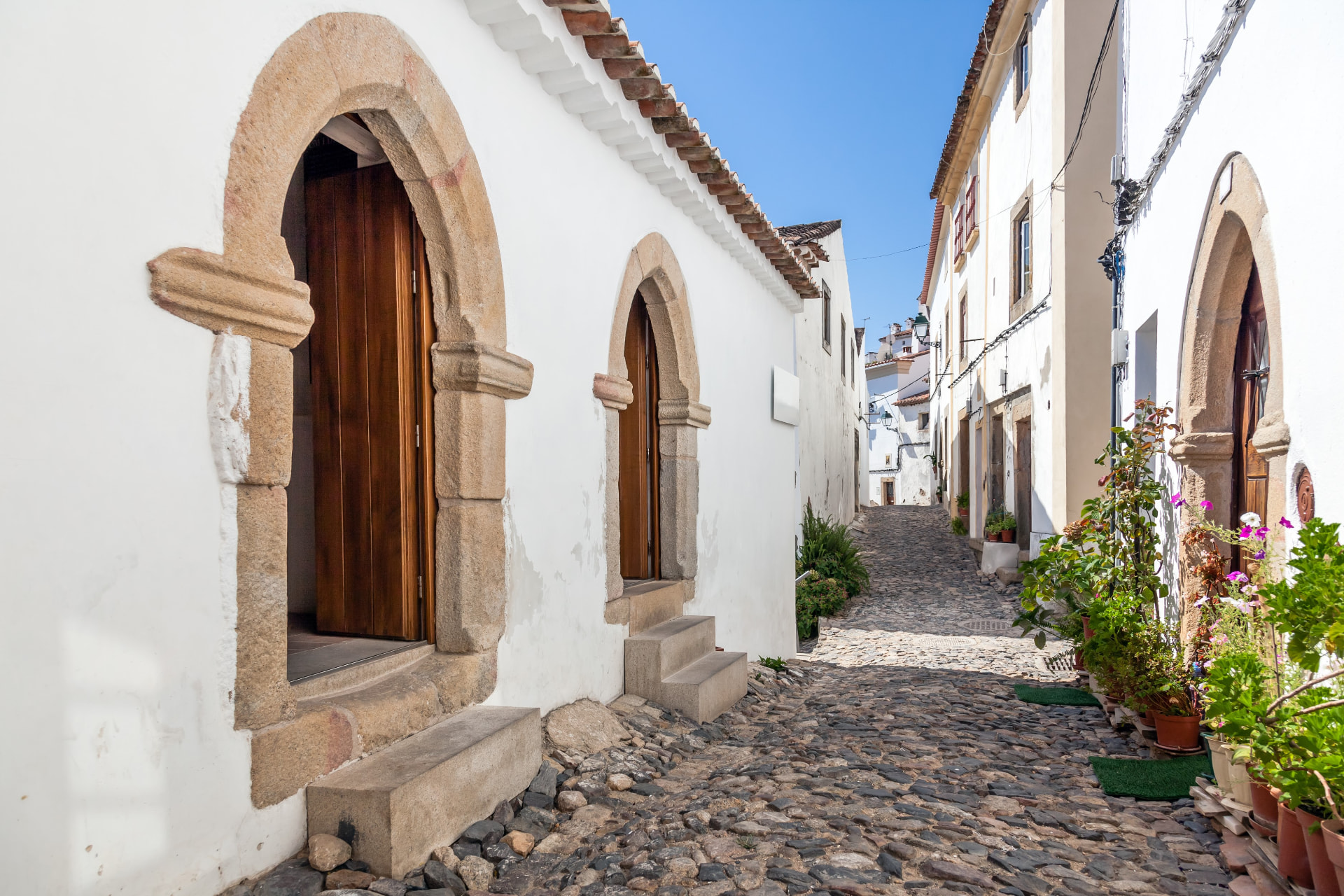
    The judiaria of Castelo de Vide occupies a steep slope below the castle, a tight grid of narrow lanes lined with granite doorframes. Many of those doorways date from the late medieval period, and several are often described as having belonged to Jewish households or workshops, with a ground-floor opening for trade and a separate door to the living quarters above. Walking these lanes, it is easier than almost anywhere else in Portugal to picture the scale and density of a medieval Jewish neighbourhood.

    The town's proximity to Castile shaped its history. After the Spanish expulsion of 1492, many Jews crossed into Portugal through this frontier region, and border towns such as Castelo de Vide saw their communities grow for a few short years. That respite ended with the Portuguese decree of 1496 and the forced conversions that followed in 1497, and the town's Jewish families became New Christians under growing suspicion.

    A driver-guide helps travellers read this landscape: where the quarter begins and ends, why it lies where it does relative to the castle and the parish church, and how the town's position near the border connected it to events in Spain. Without that framing, the lanes are charming; with it, they become a document.

    The medieval synagogue building

    At the heart of the quarter, a small building traditionally identified as the medieval synagogue is open to visitors as a museum space. Inside, a modest room preserves a carved niche in the wall that is interpreted as the place where the Torah scrolls would have been kept, and displays explain the history of the community and of Jewish life in the region.

    The building is small, and visits are typically brief, but its intimacy is part of its power. Standing in a room of this scale gives a sense of what a local congregation in a frontier town actually was: a few dozen families rather than a grand urban institution. The driver-guide can explain the evidence for the identification and the questions historians still discuss, without inflating the building's story.

    Opening hours are set by the municipality and can change with the season, and the site may close at lunchtime or on certain days. The driver checks the schedule beforehand and plans the order of the day so that guests arrive when the building is open.

    The drive and the approach

    From Lisbon, the route heads east across the Tagus and through the Alentejo, a region of cork oaks, olive groves and wide horizons. The drive is roughly 220 kilometres and takes around two and a half hours. Many journeys instead reach Castelo de Vide from Tomar, about an hour and a half away, or from Belmonte in the Beira interior, linking the town into a wider heritage circuit.

    As the road climbs into the Serra de São Mamede, the landscape becomes greener and more rugged, and the town appears on its hillside below the castle. The driver-guide uses the final stretch to set out the plan for the visit, so that guests step out of the car already oriented.

    Parking inside the historic centre is limited, and many lanes of the Jewish quarter are too narrow and steep for vehicles. The driver sets guests down at the most convenient point, usually near the top of the quarter so that the walk runs downhill, and collects them at the bottom.

    Walking the town

    Beyond the judiaria, Castelo de Vide rewards a slow walk. The Fonte da Vila, a Renaissance fountain at the foot of the quarter, is one of the town's best-known landmarks and a natural meeting point. The castle above offers views over the town's rooftops and towards the plains, and the main squares are lined with handsome churches and townhouses.

    The streets are cobbled and steep in places, so comfortable shoes are essential. For travellers with limited mobility, the driver can plan a route that combines short walks with repositioning the vehicle, so that the most important points are reached without strenuous climbs.

    A full visit to the quarter, the synagogue building, the fountain and the castle typically takes two to three hours, with time for coffee in one of the town's squares.

    Marvão and the surrounding region

    A short drive away, the walled village of Marvão crowns a granite crag at almost nine hundred metres, with a castle and views that stretch deep into Spain on clear days. It is one of the most dramatic sights in Portugal, and many travellers combine it with Castelo de Vide on the same day.

    The region around the Serra de São Mamede is quiet and green, with chestnut woods, small farms and the remains of Roman settlement. The spa town of Portalegre, a regional centre with a cathedral and a tapestry museum, lies nearby and can be included for those with a particular interest in craft.

    These additions are cultural rather than specifically Jewish, and they are offered as a way to experience the full character of the borderland in which the Castelo de Vide community lived.

    Food, wine and hotels

    The northern Alentejo is known for robust country cooking: lamb and pork dishes, bread-based açordas and migas, regional cheeses and olive oil. Local restaurants in Castelo de Vide and Marvão serve this cooking well, and the driver can recommend tables suited to the group.

    The wider Alentejo is one of Portugal's major wine regions, and estates can be visited on the way to or from the town. Accommodation options in the area range from historic pousadas, including one inside the walls of Marvão, to country houses in the hills.

    Staying overnight in the area allows the town to be seen in the softer light of evening and early morning, when the lanes are almost empty.

    Reading the doorways

    Visitors to Castelo de Vide often look for marks on doorposts that might indicate a former Jewish household, such as the cavity where a mezuzah may once have been fixed. Some such features have been noted in Portuguese towns, and they are frequently discussed. A careful driver-guide explains that interpretations vary, that not every niche or mark has a Jewish origin, and that the overall layout of the quarter is in itself the strongest evidence.

    Learning to look in this way, attentive but cautious, makes the walk far more absorbing. It also reflects the honest approach we take throughout our journeys: present what is documented, describe what is interpreted, and avoid inventing certainty.

    The Rede de Judiarias

    Castelo de Vide is part of the Rede de Judiarias de Portugal, a network of municipalities with Jewish heritage that works to preserve and present it. Other towns in the network include Belmonte, Trancoso, Tomar and many more across the country. The network has supported signage, interpretation centres and the restoration of historic buildings.

    Signage associated with the network appears in several of the towns on our routes, helping visitors identify former Jewish quarters. A driver-guide can explain how the network came about and how each town's presentation differs.

    This context helps travellers see Castelo de Vide not as an isolated curiosity but as part of a national effort to recover a long-suppressed history.

    Castelo de Vide at different hours

    In the morning, the Jewish quarter is cool and shaded, and the light falls softly on the whitewashed walls. By midday in summer it can be hot, and the steep lanes are best avoided. In the late afternoon, the town takes on a golden tone and the squares fill with residents. The driver plans the visit for the most pleasant hours of the day according to the season.

    A place to linger

    Many travellers wish they had stayed longer in Castelo de Vide. An overnight stay allows an evening walk through the quiet Jewish quarter and a morning visit before departing for Marvão or Tomar.

    Castelo de Vide in our journeys

    Castelo de Vide is part of our three-day Sephardic Route, which also includes Tomar, Belmonte and Trancoso, and of the longer six-, ten- and fourteen-day journeys. In longer journeys it is often paired with Évora and the wider Alentejo.

    Because the town sits between the Beira interior and the Alentejo, it can be placed at different points in an itinerary depending on the route. The driver-guide plans the sequence so that daily drives stay comfortable.

    For travellers with a particular interest in frontier history, a tailor-made itinerary can give the border region more time, including nearby towns on both sides of the frontier.

    Practical Points

    • —One of Portugal's most intact medieval Jewish quarters
    • —Medieval synagogue building with its preserved niche
    • —Granite doorways and the Fonte da Vila
    • —Easy combination with the walled village of Marvão
    • —Roughly two and a half hours from Lisbon
    • —Northern Alentejo food, wine and pousadas

    Frequently Asked

    How far is Castelo de Vide from Lisbon?

    Around 220 kilometres, roughly two and a half hours by road.

    Can the Jewish quarter be visited by car?

    Most lanes are too narrow and steep. The driver sets guests down above the quarter and collects them below.

    Is the synagogue building always open?

    Opening hours are set by the municipality and vary. The driver checks them before the visit.

    Can Castelo de Vide be combined with Tomar?

    Yes. The towns are around an hour and a half apart and pair well in a single day.

    Get Started

    Begin Your Private Jewish Heritage Journey

    Share your plans — we cover the whole country with private tours, transfers and curated experiences.

    Tell us your dates, group size and interests so we can craft the perfect experience.

    Select Your Journey *